
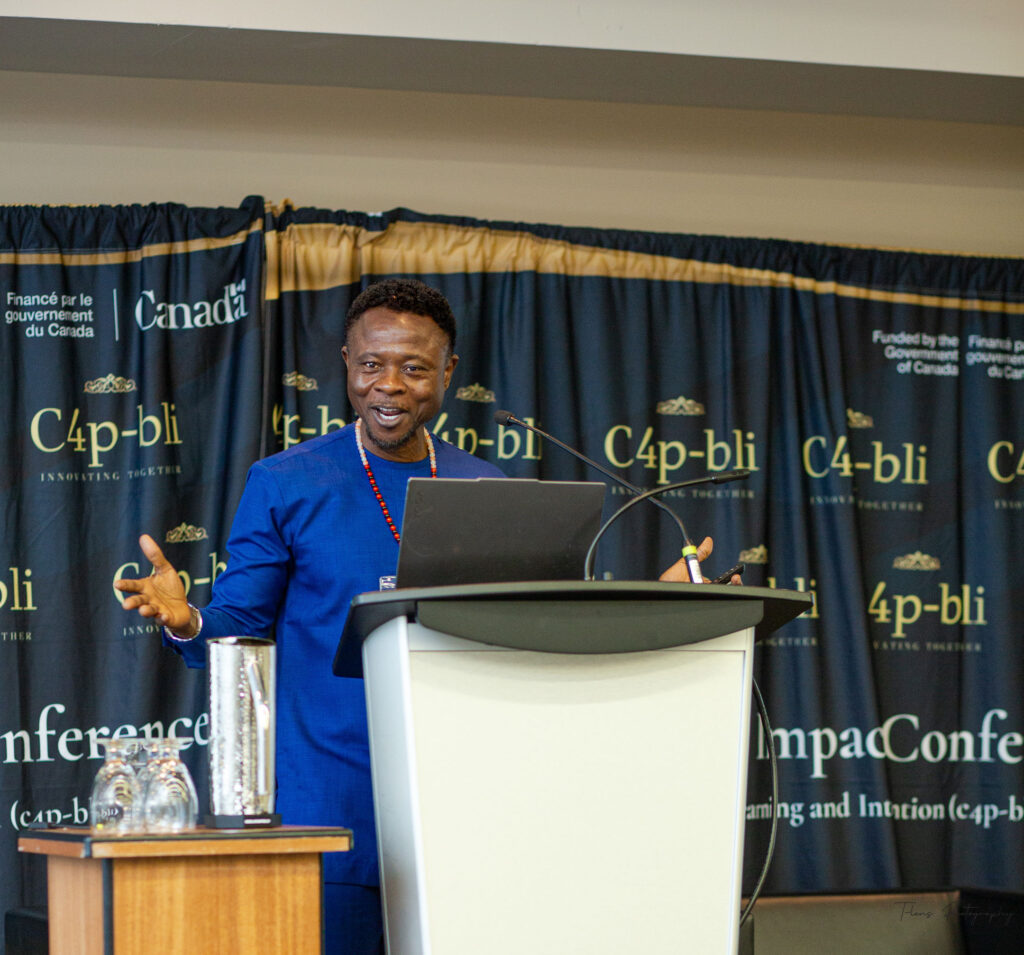
At the Global Evidence & Impact Conference (GEIC) 2025, some conversations didn’t just inform, they challenged deeply held assumptions about how the world works. One such moment came from Dr. Joseph Mensah, a Professor at York University, whose reflections on power, knowledge, and inequality pushed the audience to think beyond the obvious.
His message reframed a common belief:
power is not fixed, it is dynamic, present everywhere, and often hidden in plain sight.
Key Highlights:
1. Power Is Not Just Top Down
We often think of power as something that flows from the top, from governments, institutions, and corporations down to the people. But Dr. Joseph Mensah challenged this idea.
Power exists in relationships, systems, and everyday decisions.
Even large corporations, driven by profit, are not beyond influence. Collective action such as boycotts can shift their behavior. This reminds us that power is not one directional, it is negotiated and constantly in motion.
2. Power And Knowledge Are Intertwined
One of the most thought provoking ideas from his session was this:
power shapes what we accept as knowledge.
According to Dr. Joseph Mensah:
- Knowledge is not neutral
- It is created and validated by those who hold power
- What we accept as truth is often influenced by dominant systems
This means education itself can reflect inequality, where access, quality, and opportunity are shaped by class, race, and location.
3. Hidden Inequalities In Everyday Systems
Dr. Mensah highlighted how racism and inequality are often invisible to those not directly affected.
For example:
- Access to better schools can depend on where you live
- Where you live can be influenced by class and race
- These structures quietly reinforce inequality over time
If we do not actively question these systems, they remain normalized and unchallenged.
4. Identity And The Power Of Narratives
Another powerful insight was how identity is often defined by contrast.
In many systems, dominant identities are shaped not by what they are, but by what they are not. This creates harmful narratives and stereotypes that reinforce division and inequality.
These narratives, once established, become deeply embedded in society.
5. The Cost Of Change And Locked Systems
Changing systems is not just difficult, it is resisted.
Why?
Because systems, once established, become familiar and comfortable. This is what Dr. Joseph Mensah described as a form of lock in or path dependence.
Even when systems are flawed, people may resist change because:
- They are used to how things work
- Change introduces uncertainty
- Existing power structures benefit from the status quo
This is the hidden cost of transformation.
The Bigger Reflection
This session challenged a fundamental assumption:
that knowledge is objective and power is distant.
Instead, we are reminded that both are deeply connected, shaping the systems we live in, often without us realizing it.
The Ripple Continues
As we reflect on GEIC 2025, one truth becomes clearer:
to create change, we must first understand the systems of power that shape our reality.
Because power is not just something we observe,
it is something we engage with, challenge, and ultimately reshape.
Want to dive deeper into the insights? Visit c4p-bli.ca/2025geic/ for more information and to stay updated on our upcoming initiatives.